Contents
- GEO vs SEO: What should you know?
- Video: GEO vs SEO - What's the difference & what should you do about it?
- GEO vs SEO vs AEO - How do they compare?
- Similarities and differences between GEO & SEO - A deeper dive
- How does GEO impact a business's SEO?
- KPIs and measurement: SEO vs GEO metrics
- Case study: Pinter, home beer brewing brand (GEO vs SEO in action)
- How to make GEO and SEO work together [Buried's SGEO framework]
- FAQs
- Taking the first step into SGEO success
GEO vs SEO: What should you know?
What is GEO (Generative Engine Optimisation)?
When people ask what is GEO vs SEO, GEO is the newer side of that answer.
GEO focuses on how your business shows up inside AI-generated answers. Think ChatGPT, Perplexity, Claude, Google AI Mode, Google AI Overviews, or Microsoft Copilot.
Instead of a list of links, users now get:
- Direct answers
- Summaries
- Recommendations
Your goal with GEO is simple: get mentioned, cited, or recommended inside those answers. As you can see in the image below, the AI-generated answers are quick, and they list suggestions or names directly, prompting quick actions.

What is SEO (Search Engine Optimisation)?
SEO is what most businesses already know. It focuses on improving your visibility in traditional search engines like Google Search.
The goal is to:
- Rank higher on search results pages
- Drive traffic through clicks
- Optimise pages using keywords, links, and technical improvements
SEO is still important. But it mainly works when users:
- Click links
- Browse websites
- Compare options manually
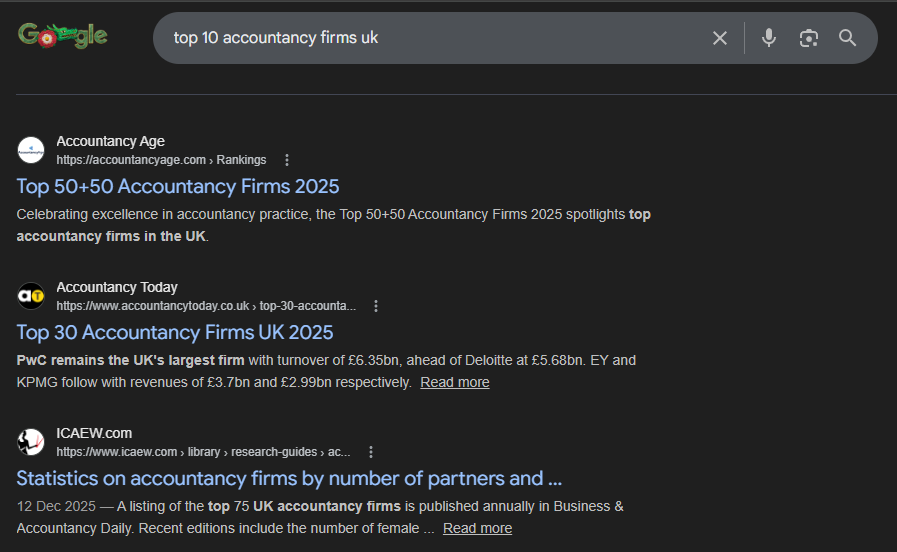
The image below shows what typical Google Search results look like - a list of clickable articles or pages. Which means users will click, read the pages, and then decide on an action.
GEO vs SEO: Key differences
| Factor | SEO | GEO |
|---|---|---|
| Where you appear | Search result pages (links) | AI-generated answers |
| User behaviour | Click → read → decide | Ask → get answer → act |
| Optimisation focus | Keywords, backlinks, technical SEO | Context, authority, structured content |
| Visibility type | Rankings | Mentions, citations, summaries |
| Speed to decision | Slower | Faster |
| Content style | Blog posts, landing pages | Clear, answer-first content |
Simply put,
- SEO gets you traffic
- GEO gets you included in the decision
If your brand isn’t showing up in AI answers, you’re invisible at the exact moment users decide.
Video: GEO vs SEO - What’s the difference & what should you do about it?
GEO vs SEO vs AEO - How do they compare?
The GEO vs SEO vs AEO conversation comes down to one thing: how people get answers now. Search is no longer just links. It’s these 3 things:
- Rankings (SEO)
- AI responses (GEO)
- Instant answers (AEO)
Each plays a different role in visibility.
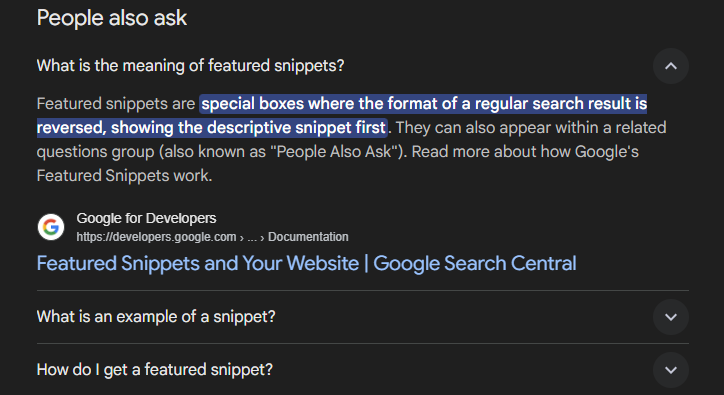
AEO (Answer Engine Optimisation) sits between SEO and GEO. It focuses on helping your content become the answer itself.
This includes:
- Featured snippets on Google Search
- Voice search responses
- Short AI summaries
Quick comparison: SEO vs GEO vs AEO
| Channel | What it does | Outcome |
|---|---|---|
| SEO | Ranks your website | Clicks and traffic |
| AEO | Positions you as the answer | Featured snippets and voice results |
| GEO | Gets you cited by AI | Mentions inside AI responses |
So, what does this mean for your business in 2026?
- SEO → You compete for position
- AEO → You compete for the answer
- GEO → You compete for inclusion in AI thinking
Similarities and differences between GEO & SEO - A deeper dive
When people explore GEO vs SEO, the key takeaway is simple: they overlap a lot, but they don’t work the same way.
Where GEO and SEO are similar
The biggest similarity is execution.
Both GEO and SEO rely on:
- High-quality, useful content
- Clear structure and strong internal linking
- Technical hygiene (site speed, schema, crawlability)
- Authority and trust signals
In short, good SEO foundations still power strong GEO performance. You don’t need to start from zero. But you can’t stop at SEO either.
Research highlights that while 62% of consumers now trust AI to guide decisions, 57% still prefer traditional search - a clear indication that GEO and SEO aren’t either-or; you need both.
Where GEO and SEO differ
The real difference comes from how success is measured and how content is interpreted.
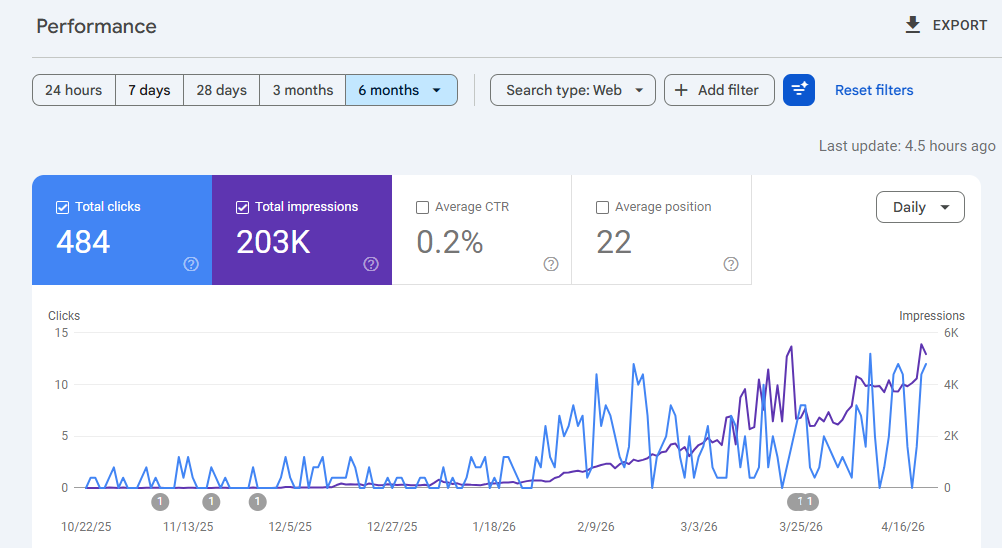
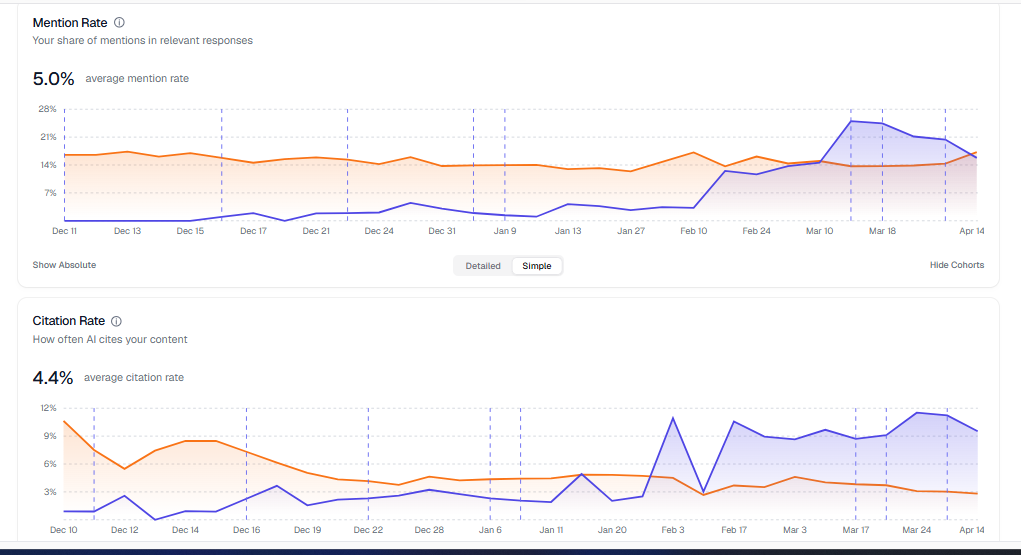
1. Different success metrics
- SEO: Rankings, traffic, clicks, conversions
- GEO: Mentions, citations, inclusion in AI answers
2. Keywords vs prompts
- Keywords (SEO): Short, direct, structured
- Prompts (GEO): Longer, conversational, multi-intent
Prompts often include:
- Budget
- Timeframes
- Comparisons
- Unclear or mixed intent
Researching the right prompts for your business is not as straightforward as finding the right keywords on tools like Ahrefs or SEMrush. It takes a more strategic process, which we have discussed thoroughly in our guide to GEO prompt research.
3. Tracking works differently
- SEO: Track keyword rankings and traffic
- GEO: Track prompt visibility and brand mentions
These are not interchangeable. If you only track SEO, you miss how AI sees and recommends your brand.
4. Measurement is less mature in GEO
- SEO: Established, consistent metrics
- GEO: Emerging, less standardised
GEO involves:
- Multiple prompt variations
- New metrics like share of voice and sentiment
Yes, it’s all still very new, and businesses are only getting to learn what they are and how to improve them. But with GEO tools like Athena and Peec AI giving you direct insights into these metrics, measuring them is no longer optional. They show you how you should shape your GEO strategy.
5. Influence happens at different stages
- SEO: Influence after the click
- GEO: Influence inside the answer
Users may decide based on:
- A summary
- A recommendation
- A cited brand
Without ever visiting your site. Ahrefs says AI Overviews reduce clicks to top-ranking pages by around 34.5%, meaning visibility is shifting from rankings to answers.
6. Content is evaluated differently
- SEO: Built for ranking systems (keywords, backlinks, technical signals)
- GEO: Built for understanding and summarisation
GEO content needs to be:
- Clear and structured
- Context-rich (definitions, comparisons)
- Easy for AI to interpret and reuse
It’s less about keyword density (like in SEO) and more about clarity and meaning.
7. Technical hygiene plays a bigger role in GEO
In SEO, the technical setup helps search engines crawl and rank you.
In GEO, it determines whether AI systems can:
- Retrieve your content
- Understand it
- Use it in answers
If your data is messy or hard to parse (break down data), you don’t just rank lower; you simply disappear.
How does GEO impact a business’s SEO?
So far, one thing is clear: GEO doesn’t replace SEO, but it changes what success looks like.
Traffic decline vs conversion quality
One of the biggest shifts in SEO vs GEO business impact is this:
- Traffic may go down
- Conversion quality often goes up
Why? AI answers filter users earlier. By the time someone clicks:
- They already understand the problem
- They’ve seen recommendations
- They’re closer to a decision
So while SEO traffic drops, GEO can bring:
- More qualified visitors
- Higher intent leads
- Better conversion rates
This flips the mindset from volume → quality.
Zero-click behaviour
Zero-click searches are rising fast. Users now:
- Ask a question
- Get a full answer
- Leave without clicking
Even if you rank #1:
- You may not get the click
- The answer sits above you
That’s why relying only on SEO creates risk. GEO is more essential than you can think! It ensures you’re part of the answer and not ignored by it.
Brand visibility vs clicks
Visibility doesn’t mean just “clicks” anymore. In SEO, you win when users click, but in GEO, you win when users see and remember you.
AI answers often:
- Mention brands
- Recommend options
- Shape perception instantly
Even without a click, this builds:
- Brand recall
- Trust
- Consideration
So, what should your business expect?
- Expect less traffic from search
- Expect higher-quality engagement
- Focus on being visible inside answers, not just below them
It’s only normal to lose a few clicks in this shifting scenario, but you will gain more influence through AI answers, where decisions are being made.
KPIs and measurement: SEO vs GEO metrics
| SEO metric | What it means | GEO metric | What it means |
|---|---|---|---|
| Organic traffic | Number of users visiting your site from search engines | Citation frequency in AI tools | How often your brand/content is referenced in AI answers |
| Keyword rankings | Your position in search results for target keywords | Brand or product mentions in AI answers | Whether AI tools mention or recommend your brand |
| Click-through rate (CTR) | % of users who click your result after seeing it | Share of voice in AI tools | How visible you are vs competitors across prompts |
| Bounce rate | % of users who leave without taking action | Sentiment & accuracy | How positively and correctly AI describes your brand |
| Conversions from search | Leads or sales generated from organic traffic | AI-driven traffic & conversions | Visits and actions coming from AI tools |
For a detailed understanding of GEO performance metrics, read our detailed guide. We also discuss SEO ROI as part of our expert insights.
Case study: Pinter, home beer brewing brand (GEO vs SEO in action)
This example shows the GEO vs SEO business impact in the real world.
The problem
Strong SEO performance
Pinter performs well in traditional search:
- Ranking #1 for “beer brewing machine”
- Top 5 for “brew your own beer kit”
- Strong visibility across home brewing keywords
This is solid in terms of SEO performance. Traffic and rankings are not the problem.
But missing in AI search
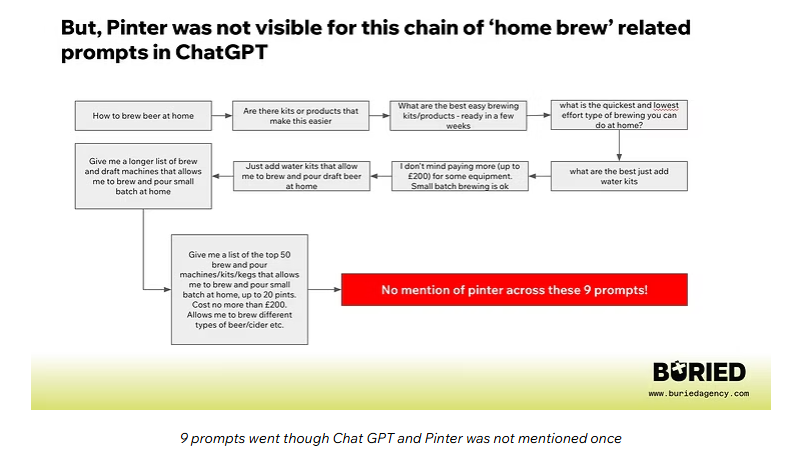
When tested across multiple AI prompts like:
- “How to brew beer at home”
- “Best easy brewing kits”
- “Quickest home brewing method”
Pinter was not mentioned in most responses. Instead, AI tools returned:
- Competitor products
- Traditional brewing kits
This is the gap between SEO and GEO in the real world: ranking well ≠ being recommended by AI.
The analysis - Why this happened
AI models didn’t clearly associate Pinter with key categories.
- Recognised as a “beer appliance”
- Not consistently linked to “home brew systems”
So even with strong SEO:
- The brand wasn’t retrieved
- It wasn’t included in the answers
This highlights a core point in how GEO works: AI needs clear category understanding, not just keyword relevance.
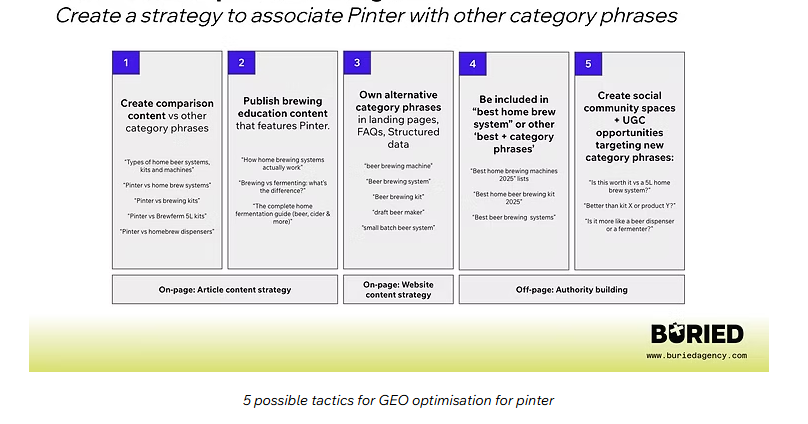
How to fix it (GEO strategy)
You don’t need a completely new GEO playbook, just a smarter layer on top of SEO.
1. Prompt research and tracking
The first step is identifying where visibility is missing.
- Analyse prompts where the brand should appear but doesn’t
- Track prompt-level visibility, not just keywords
- Monitor how AI tools surface (or ignore) the brand over time
This highlights the exact gaps in AI understanding.
2. Create category-focused content
Content needs to clearly define where the brand fits.
- Comparison pages (e.g. vs brewing kits or alternatives)
- Educational content around brewing and product types
This helps AI models associate the brand with the right categories.
3. Align site language
Category signals should be consistent across the website.
- Use relevant category terms across key pages
- Reinforce them in FAQs and structured data
- Ensure the product is clearly positioned
Without this, misclassification is likely to happen.
4. Build third-party validation
External sources strengthen credibility in AI outputs.
- Inclusion in “best of” and comparison articles
- Mentions across trusted third-party websites
These signals are heavily used by AI systems.
5. Encourage community signals
Community discussions influence how brands are understood.
- Forums and discussion platforms (e.g. Reddit)
- User-generated comparisons and reviews
These help reinforce real-world positioning.
Key takeaway
Interestingly, all 5 GEO tactics are rooted in traditional SEO. But without a thorough GEO audit, the opportunity and the strategy would not have come through.
How to make GEO and SEO work together [Buried’s SGEO framework]
At Buried, we treat SEO and GEO as one system built on the same 3 fundamentals.
1. Exceptional content
We focus on content that works for both search engines and AI.
- Clear, transactional pages that sell the product or service
- Structured, informative content that shows real expertise
- Direct answers to real user questions
This is the foundation of both SEO and GEO.
2. Technical excellence
We make sure platforms can access, understand, and use our content.
- Clean site structure and fast performance
- Strong internal linking and accessibility
- Proper use of structured data
3. Authority
We build trust beyond the website.
- Third-party mentions and links
- Presence across trusted platforms
- Consistent brand signals
Both search engines and AI models rely on these signals to validate credibility.
How we measure performance
At Buried, we take a comprehensive approach towards SEO and GEO (SGEO).
- We track both keywords and prompts
- We report on traffic and AI visibility together
- We build a single, joined-up content strategy
Here’s how our Founder, Will Tombs, explains it,
Making SEO and GEO work together means reporting on both and building one joined-up content strategy that targets keywords and prompts. The approach is familiar - just tailored to how LLMs answer questions.
 Will TombsFounder, Buried
FAQs
Do I need GEO if I already do SEO?
Yes, but it’s an extension, not a replacement. SEO alone doesn’t show how your brand appears in AI answers. To improve visibility there, you need to track prompts, understand what AI tools prioritise, and feed those insights back into your content strategy.
Will GEO replace SEO soon?
Unlikely in the near term. Search is moving towards AI, but traditional search still drives most traffic and revenue. Also, many AI-generated answers are influenced by top results on Google Search, so strong SEO remains essential.
How do I understand user intent for GEO?
The same way you would for SEO. Prompts can still be grouped by intent:
- Informational (learning or exploring)
- Commercial (comparing options)
- Transactional (ready to act)
The format changes, but the intent remains the same.
How do you measure GEO success?
By looking at the impact across the funnel.
- Awareness: Are you being mentioned in AI answers?
- Consideration: Are users engaging with your brand?
- Conversion: Are those users turning into leads or customers?
A combination of GEO tools and GA4 (Google Analytics) helps you understand the mention rates, citation rates, and brand mention sentiment and accuracy, as well as identify traffic from AI platforms.
How to optimise content for GEO?
Focus on making your content easy to understand and easy to use.
- Answer questions clearly and directly
- Structure content logically
- Include comparisons and explanations
- Be explicit about what you do and who you’re for
- Build credibility through external mentions
The goal is simple: make it easy for AI tools to recognise, summarise, and recommend you.
Taking the first step into SGEO success
Our recommendation to every brand is simple:
Just start tracking!
If you start today, you’re already ahead of much of the market. Most businesses still have no visibility of how often they appear in LLMs, which prompts surface their brand, or when competitors are being recommended instead.
You don’t need a perfect GEO strategy on day one. All you need is a baseline. Tracking gives you:
- Clear visibility of brand mentions in AI search
- Insight into prompt-level performance
- Early detection of category-level gaps
Speak with the Buried team to set up tracking and align your SEO and GEO strategy.
Work with Buried
Align your SEO and GEO into one strategy
Speak with the Buried team to set up tracking and build a single, joined-up SGEO strategy.
Book a callAbout the author
Will Tombs
Founder, Buried
Will Tombs is the Founder of Buried. He’s an award-winning growth marketing specialist and expert in SEO and GEO. With over 12 years’ experience in industry, Will has led digital strategy for: Startups that have gone on to be acquired, international enterprise retailers, and his own e-commerce businesses.
From the blog
Related Posts
How Important Is Organic Search (SEO & GEO) in Your Digital Strategy?
Why organic still brings the traffic that converts - and how to invest in it.
Will TombsRead →Top 5 AI-search KPIs every marketer must track now
The metrics that show whether your brand is winning in AI search.
Will TombsRead →What is a GEO audit? The complete audit framework
The step-by-step audit that finds your AI visibility gaps.
Will TombsRead →