Deciding where to allocate budget and resources across marketing channels is one of the hardest parts of a CMO’s job. And it’s getting harder.
Web privacy changes mean less data and murkier attribution. The full customer journey is increasingly invisible.
The easy path is to open Google Analytics, compare traffic sources against conversions, and let last year’s numbers dictate this year’s strategy. But historic data only tells you what happened, not what’s possible.
The best strategists use data as a starting point, not the finish line. They look at market shifts, competitive dynamics, and channel fundamentals to identify where untapped opportunity might sit. Then they test, measure, and iterate.
So how do you determine the right level of focus for organic search? Start with first principles, not just performance dashboards.
Why is organic search important?
There are three main reasons organic search matters. They’re also why we built Buried around it.
1) Organic search drives the largest share of website traffic globally
This will vary from industry-to-industry and from site-to-site, but the pattern holds consistently.
2) Every business should invest in organic search to some degree
This is the only marketing channel we’d recommend universally. The scale of investment should vary, some businesses need minimal focus, others should make it their primary channel, but every brand needs a baseline presence. We’ll cover how to determine the right level later.
3) Organic search is growing
AI search platforms like ChatGPT and Perplexity are creating new search behavior. People are asking longer, more complex questions they wouldn’t have bothered typing into Google. Traditional Google search volume may plateau or decline, but total organic search volume is growing. That’s net new opportunity.
Related read - How ChatGPT and other LLMs work?
You could argue that organic search also converts better than other channels due to trust and intent factors. But these three reasons alone make the case.
How to determine the importance of organic search for your brand
The importance of organic search comes down to ROI potential. And that depends on a few key factors.
Organic search demand based on your product/service offering
If your business offers customised biker jackets for Chihuahuas, the chances are that not many people are searching for your product. There will be some, and the more niche the term, the higher the chance of conversion, so while search volumes may be low, this is still an opportunity.
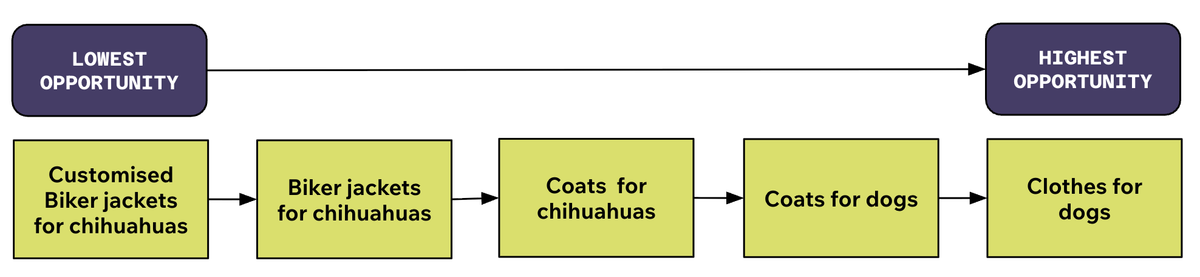
If your business also offers coats in different styles for Chihuahuas, or coats for other breeds of dog, or even clothes for other animals entirely, at this point, your organic search opportunity is growing exponentially.

Organic search demand based on your Industry and business model
Certain types of businesses are naturally suited to organic search. In fact, if a mass-market B2C ecommerce business isn’t considering SEO and GEO in their digital strategy, they’re likely not doing any marketing at all.
Some business models rely entirely on organic search traffic. Recipe sites and online news publications are good examples, they monetise by placing ads over their content. For these businesses traffic equals revenue, so free organic traffic is gold dust. Organic search optimisation for traditional search engines like Google and AI search engines like ChatGPT is critical to their business model.
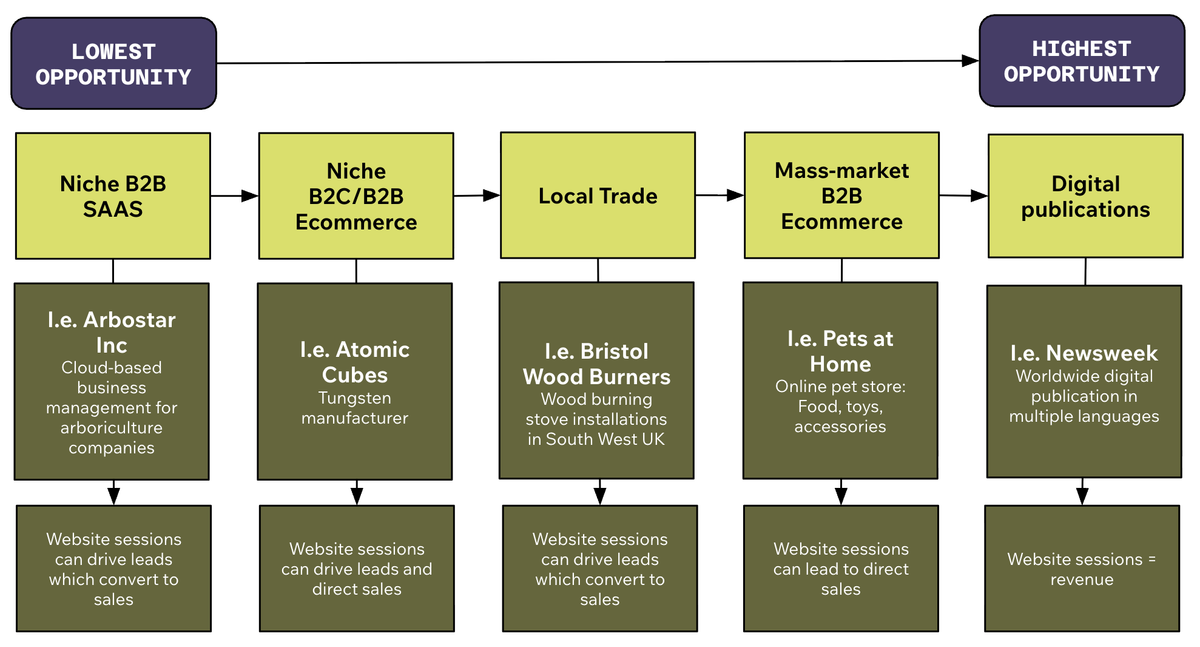
You could argue that organic website traffic is more important for ecommerce businesses than it is for lead-gen businesses. Organic traffic for ecommerce can result in direct sales. In lead gen, there’s often a lengthy sales process with multiple variables determining whether that lead converts to a sale. This is nuanced, but the point stands: organic search opportunity depends on your business model and how niche your offering is.
The organic search opportunity spectrum
Your industry and business model doesn’t always define your organic search opportunity, let’s compare two B2B SAAS businesses at opposite ends of the opportunity spectrum:
Low Opportunity: ArboStar Inc, a cloud-based business management platform tailored for arboriculture/tree care/landscaping companies. The problem their business solves is very niche, and therefore search opportunity is low.
High Opportunity: HubSpot have invested heavily in organic search for years because they have a very high opportunity for high volume phrases around “marketing automation software” and “CRM software for SMBs.”
The consideration here is your business model and how niche the problem your business solves is.
Niche brands solving specific problems with small audiences = low potential to be discovered.
Mass market appeal, big problem-solving, big audience brands = large potential to be discovered.
The existing demand for your product will determine the opportunity in organic search, and it will usually dictate how much competition there is to rank.
Creating an action plan
The first step in deciding the prioritisation of organic search within your strategy is to assess the opportunity. This means running prompt and keyword research alongside competitor analysis to understand who sets the benchmark in your space and where the biggest opportunities lie.
The net organic search opportunity is expanding thanks to AI-driven search, but that doesn’t mean every business should completely pivot towards it. In some industries, search volumes are low, and competition for clicks can make organic growth slow or expensive. In those cases, paid search or other digital tactics may deliver a stronger ROI.
The key is finding the right balance.
At Buried, we believe search has a role to play in every business, but the right role depends on the opportunity, your goals and resources. That balance is what our organic search strategy service exists to work out. We work with you to understand where organic search fits into your broader strategy, and to identify the low-hanging opportunities that can drive meaningful growth for your business.
Work with Buried
Speak to an AI search expert
Not sure where organic search fits in your strategy? Tell us your goals and we will map the opportunity and the right level of focus.
Book a call
About the author
Will Tombs
Founder, Buried
Will Tombs is the Founder of Buried. He’s an award-winning growth marketing specialist and expert in SEO and GEO. With over 12 years’ experience in industry, Will has led digital strategy for: Startups that have gone on to be acquired, international enterprise retailers, and his own e-commerce businesses.
From the blog