Contents
- What is AI watermarking?
- How does AI watermarking affect SEO & GEO today?
- Does Claude watermark text?
- Why has the Claude watermark caused a backlash?
- How should Claude's watermarking impact the way you write?
- Should you use a different LLM that doesn't watermark text?
- Is AI-assisted writing the same as AI-generated thinking?
- What's a better test for content quality than watermarking?
- Could penalising AI-assisted writing backfire?
- Will watermarking actually stop AI slop?
- What should you do about AI watermarking?
- Frequently asked questions about AI/Claude watermarking
What is AI watermarking?
AI watermarking is a way of making AI-generated content identifiable without changing what a reader sees. It is becoming part of the wider industry push towards clearer AI provenance, with Google already using SynthID to watermark Gemini-generated text. Now Claude has brought the conversation back into focus, with Anthropic introducing its own approach to text watermarking under the EU’s growing transparency requirements.
The intention is understandable: make it easier to identify when AI has been involved in creating content. But that tells us something about origin, not quality.
An AI watermark may help answer “was an LLM involved?” It cannot tell us whether the idea is original, the author credible or the content useful. And that is the distinction worth talking about.
How does AI watermarking affect SEO & GEO today?
Right now, there is no published evidence that an AI text watermark is itself a negative signal for SEO or GEO. That means you should not make watermark avoidance the priority. What matters far more is whether the finished content is original, useful, credible and genuinely adds something for the reader.
That is broadly consistent with Google’s current guidance, which focuses on valuable, unique and non-commodity content rather than whether generative AI was involved in producing it.
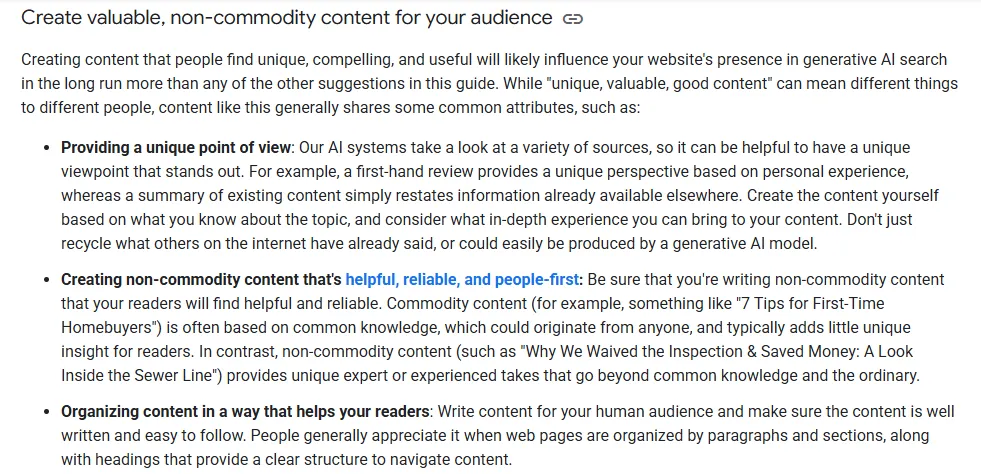
The same applies to LLM visibility. OpenAI’s published information on ChatGPT Search refers to factors such as relevance, reliability and recency; it does not list AI watermarking as a reason to suppress a source.
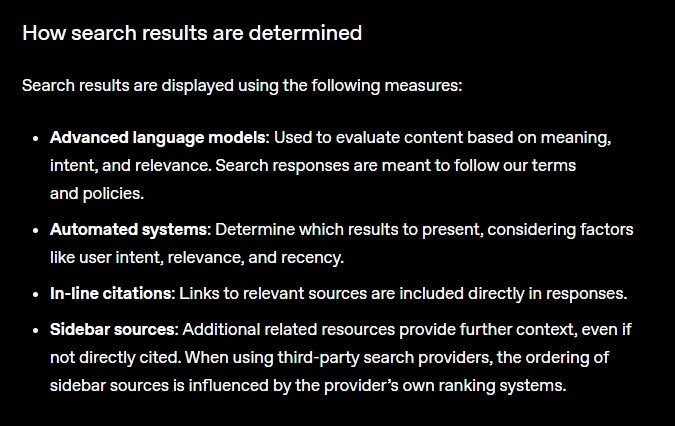
So, for now, weak or derivative content is a much bigger SEO and GEO risk than the presence of a watermark.
Does Claude watermark text?
The big news... Claude is joining the move towards text watermarking. And it has shaken up the AI writing conversation, raising some pretty big questions about authorship, trust and what a watermark actually proves.
Anthropic says future Claude models will generate text containing an invisible statistical watermark designed to indicate the likelihood that Claude was involved in producing it. The watermark does not identify the user and is not visible to readers.
But why do that in the first place?
The immediate driver is transparency. Under the EU AI Act, providers of generative AI systems must make AI-generated or manipulated content detectable in machine-readable form, where technically feasible. The aim is to reduce risks around deception and manipulation and improve the integrity of the information ecosystem.
That explains why AI watermarking exists. What it still cannot tell us is whether the content itself is any good.
Why has the Claude watermark caused a backlash?
The backlash is not really about transparency. It is about what people might assume a watermark means.
Some Claude users worry that evidence of AI involvement could be mistaken for evidence of AI authorship. Business Insider reported users cancelling subscriptions over concerns that professional or academic work could appear to have been written by Claude, even when the model had only been used to edit or improve their own work. However, Anthropic said it had not seen a notable overall rise in cancellations.
Anthropic itself makes an important distinction: detecting a Claude watermark does not establish authorship. Claude may have proofread, translated, summarised or edited material whose underlying ideas came from a person.
How should Claude’s watermarking impact the way you write?
We would not recommend using Claude as your main writing model in the first place. For writing specifically, there are stronger LLMs than Claude, particularly for nuance, tone and long-form content. But whichever model you use, the bigger principle stays the same: AI should support the writing process, not replace it.
Most of the final piece should still be shaped by human expertise, judgement and editing. Use AI to help organise ideas, improve clarity or sharpen language - not to generate large blocks of generic copy and publish them untouched.
That means:
- Start with original research, experience or proprietary insight.
- Add genuine expert opinion.
- Bring a clear point of view.
- Use AI to structure and improve the writing, not invent the expertise.
- Rewrite and humanise the output.
- Apply proper editorial judgement before publishing.
Claude’s watermark may change how AI involvement is identified. It should not change the standard you apply to the content itself.
Should you use a different LLM that doesn’t watermark text?
Not simply to avoid a watermark.
If another LLM is better for your workflow, writing style, research needs or technical requirements, use it. For example, we at Buried prefer using ChatGPT for any assistance with writing. Claude is great - just not really suitable for content!
But switching models purely because one leaves a detectable provenance signal turns the focus back to the wrong thing.
There is also no guarantee that an unwatermarked model will stay that way. Anthropic says other major providers are implementing provenance measures under the same EU transparency requirements, while Google already uses SynthID to watermark text generated through Gemini.
More importantly, a watermark does not appear to be a problem for visibility right now. Google’s current guidance does not identify AI watermarking as a negative ranking signal at all. There is similarly no published indication from OpenAI that watermarked text is penalised in ChatGPT Search.
But, well, could that change in future? Absolutely. If search engines or LLMs eventually begin treating provenance as a quality signal, the decision becomes more complicated. But we are not there today.
Is AI-assisted writing the same as AI-generated thinking?
Good writing is a specialised skill. Having deep expertise does not automatically make someone good at turning that expertise into a clear, engaging article. Someone can spend 20 years building knowledge in an industry and still struggle to explain what they know in a way people actually want to read.
AI changes that equation. It can help someone structure an argument, sharpen the language or communicate a complex idea more clearly without inventing the underlying expertise. The idea can still be original.
The experience can still be human.
The perspective can still belong entirely to the person behind the piece.
That is very different from asking a model to generate hundreds of generic articles about subjects the publisher knows nothing about. The question is not whether AI helped shape the words. It is whether there was anything worth saying in the first place.
What’s a better test for content quality than watermarking?
A better question starts with the content itself.
- Is there actually something new here?
- Does the person behind it have genuine experience or expertise?
- Is there a reason to trust what they’re saying?
- Can someone use the information, or is it just another version of what already exists?
A useful test is this: could the same article have been produced by scraping the first page of Google and asking a model to repackage it? If yes, the problem is not AI involvement. The problem is regurgitation.
Could penalising AI-assisted writing backfire?
There is a bigger consequence here than SEO, GEO, rankings or content policy.
If we start treating AI-assisted writing as inherently less trustworthy, we risk discouraging people from sharing genuinely useful ideas simply because they needed help expressing them. The problem is not that AI helped shape the words, but whether the thinking behind them was original and valuable.
There is a wider knock-on effect too. The internet gets better when people contribute new knowledge, experience and perspectives. If watermarking ends up suppressing that contribution, we may solve one transparency problem by creating a much bigger information-quality problem.
Will watermarking actually stop AI slop?
Even if watermarking improves transparency, it cannot solve the low-quality content problem on its own. Anthropic acknowledges a basic limitation: light editing may preserve Claude’s watermark, but a complete rewrite can remove it entirely.
And that is only one route around it. PCWorld points out that Claude-generated text could be passed through an unwatermarked open-weight model, meaning the absence of a watermark could never prove that something was written by a human.
Kevin Indig reaches a similar conclusion: if marked content starts being penalised, low-quality production can simply move to models that do not mark their outputs, creating an ongoing detection-and-circumvention cycle.
That is almost exactly what we think, too - Watermarking may help establish provenance. But slop is ultimately a quality problem, and provenance alone cannot fix it.
What should you do about AI watermarking?
The most practical answer for SEOs and content teams? DO NOT panic, and don’t rebuild your content process around avoiding a watermark. There is currently no indication from Google that watermarked text is penalised in search. Its guidance continues to focus on useful, original content that adds genuine value.
Take these steps instead:
- Choose an LLM for the quality of its output, not simply whether it watermarks text.
- Start with human expertise, original research, client knowledge or first-hand experience.
- Use AI to organise ideas, improve structure and sharpen writing rather than generate large amounts of finished copy.
- Rewrite and humanise the content so it sounds natural, specific and informed.
- Fact-check, proofread and apply proper editorial judgement before publishing.
- Keep watching how Google, LLMs and AI providers treat provenance as standards develop.
That is broadly the approach we take at Buried too: AI helps the writing process, but it does not replace the expertise or editorial work behind the final piece.
“We’re continuing to humanise and use our own skills and resources to make content really high quality and unique for all of our clients.”

Will Tombs, Founder, Buried
Frequently asked questions about AI/Claude watermarking
Can you detect a Claude watermark?
Yes, but not with a normal AI detector. Anthropic says Claude’s watermark can be identified using its private watermark key and that it plans to offer a detection API. Detection also becomes more reliable with longer passages, where there are more word choices for the watermark to act on.
Can editing remove a Claude watermark?
Potentially. Anthropic says light editing is unlikely to remove the watermark completely, but a full rewrite in which every word is replaced can remove the signal. Proofreading or minor edits done using Claude may contain little detectable watermarking in the first place because Claude has made fewer word choices.
Can watermarked writing be penalised by Google?
There is currently no evidence that Google penalises content simply because it contains an AI watermark. Google’s published guidance focuses on the value of the finished content, not whether AI helped create it. Here’s what Google says - Using generative AI is acceptable, however, producing large amounts of unoriginal content primarily to manipulate rankings can violate its scaled content abuse policy.
So, a Claude watermark is not, based on current guidance, a negative ranking signal. Quality, originality and usefulness remain the more important considerations.
Is watermarked text less likely to appear in LLM answers?
There is currently no published evidence that watermarked text is automatically less likely to be cited or surfaced by LLM-powered search systems. For example, OpenAI says ChatGPT Search uses multiple factors to identify relevant and reliable information and requires sites to be accessible to OAI-SearchBot for full inclusion. Its published guidance does not identify AI watermarking as an exclusion or ranking factor. Google similarly recommends valuable, unique and non-commodity content for visibility within its generative AI search experiences.
For now, there is little reason to assume a watermark alone will reduce LLM visibility.
Does ChatGPT watermark text?
It does not at present. OpenAI does not currently say that ChatGPT text carries a watermark. Its provenance documentation covers supported AI-generated images and audio, but not text. That, however, may change in future as AI provenance standards develop.
Speak to an AI search expert
Not sure where organic search fits in your strategy? Tell us your goals and we will map the opportunity and the right level of focus.
Book a callAbout the author
Will Tombs
Founder, Buried
Will Tombs is the Founder of Buried. He’s an award-winning growth marketing specialist and expert in SEO and GEO. With over 12 years’ experience in industry, Will has led digital strategy for: Startups that have gone on to be acquired, international enterprise retailers, and his own e-commerce businesses.